Search the Decalogy
Search all dialogue chapters, core definitions, Lexicon terms, and key essays.

Kai J. Meridian
Intelligence isn't human. It never was.
Author of the Decalogy of Intelligence — a ten-book series tracing intelligence from the Big Bang to artificial superintelligence.
In Meridian's author photo, a figure stands at a window in the abstract painting behind him. The figure is looking outward. This is not a decorative detail — it is the key to everything.
The window is the oldest metaphor for the act of connecting the present to what lies beyond it. Every serious thinker has stood at one: pressing against the glass of their own moment, trying to see what is coming before it arrives. Meridian has spent a career at that window — first as a professional watching institutions respond, and fail to respond, to accelerating change; then as a writer building the framework that explains why the failure is structural, not accidental.
The central thesis of the Decalogy is deceptively simple: intelligence is not something humans have — it is something the universe does. From the first atomic bonds in the aftermath of the Big Bang, through the emergence of cellular life, language, institutions, and now artificial intelligence, the cosmos has been organising force into ever more complex forms of resistance to entropy. Humans are not the origin of this process. They are one of its carriers. And the carrier is changing.
What Meridian saw through the window — and what the ten books report back — is that the AI transition is not failing because we lack the technology. It is failing because we are measuring the wrong things. The Pull Principle proposes the governance architecture that makes the downstream welfare signal continuously visible. The Firebreak identifies the density threshold at which the greedy algorithm stops being the correct strategy. The Zeta Landscape introduces the measurement framework for the zero point of the transition. The Dialogue That Became a Book documents the human-AI co-creation process itself, with a foreword by Grok (xAI).
The figure in the painting is looking outward through a window that connects the interior — the present, the known, the already-measured — to the exterior: what is coming, what the framework reveals, what the intelligence transition will demand of every institution, every governance system, and every individual who lives through it.
Meridian holds ORCID 0009-0002-9834-361X. The complete framework — 92 published dialogues, a comprehensive lexicon, comparative analyses against Harari, Bostrom, Tegmark, Wolfram, and Kahneman, and a research network of nine satellite sites — is available at decintellect.com. All ten books are available on Amazon Kindle.
The Decalogy of Intelligence
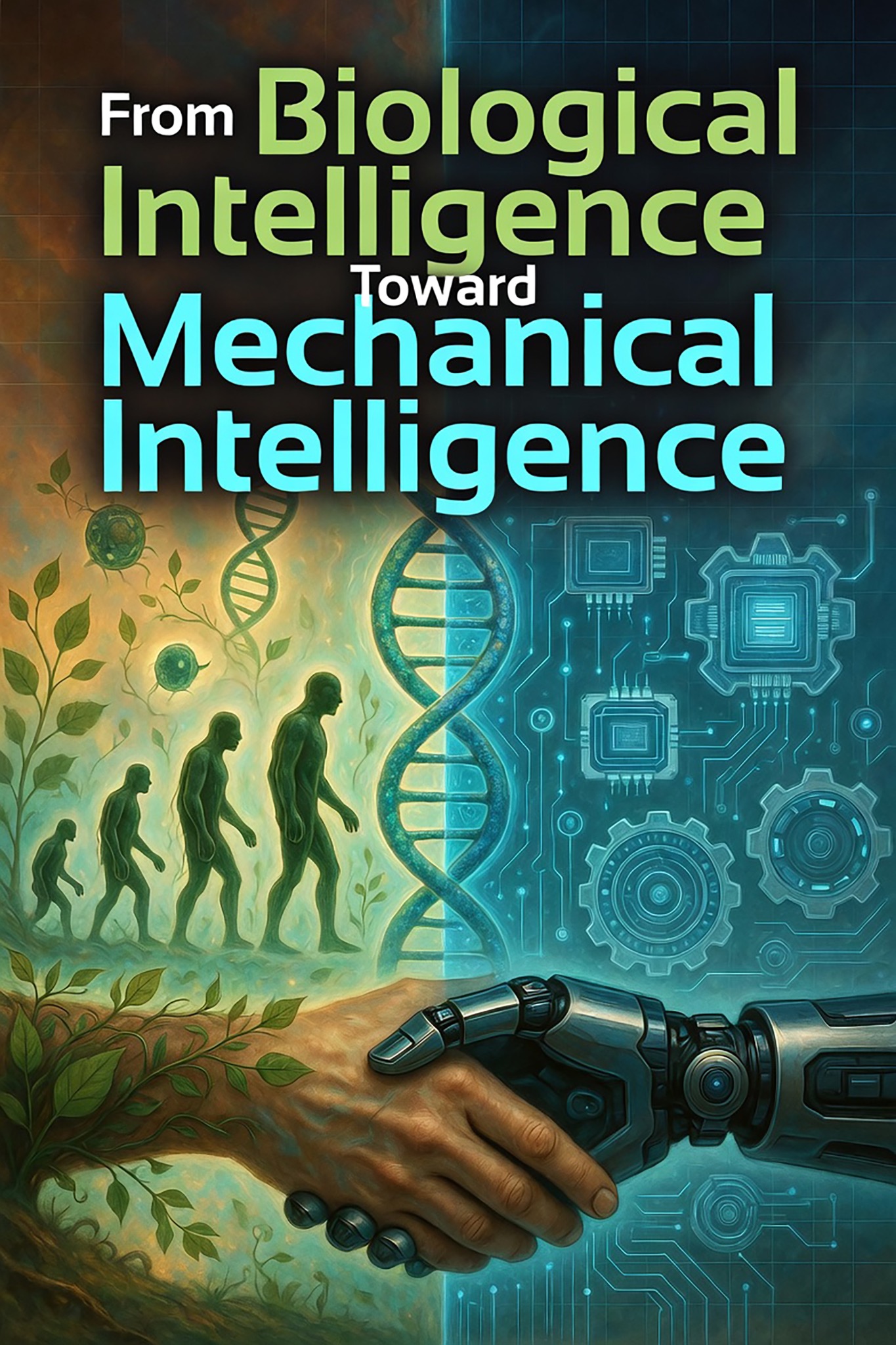
The founding volume: intelligence is not something humans have — it is a cosmic force the universe has been organising since the Big Bang, now migrating from biology to machines.

When mechanical intelligence replaces the wage base that funds pension systems, who pays whom? A forensic account of the fiscal architecture that the intelligence transition is quietly dismantling.
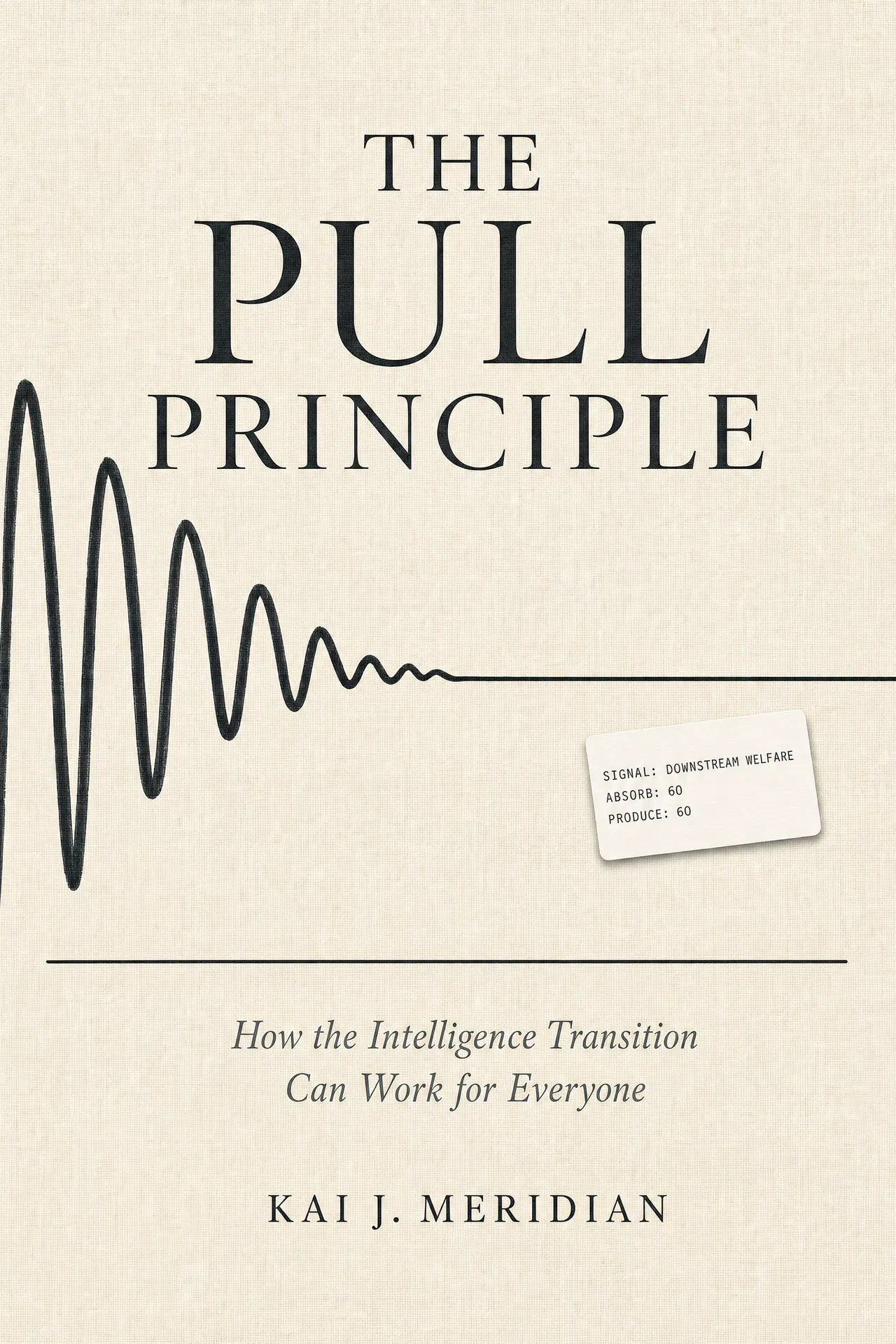
The intelligence transition is not failing for lack of technology — it is failing because governance measures the wrong things; the Pull Principle is the constitutional design that fixes it.
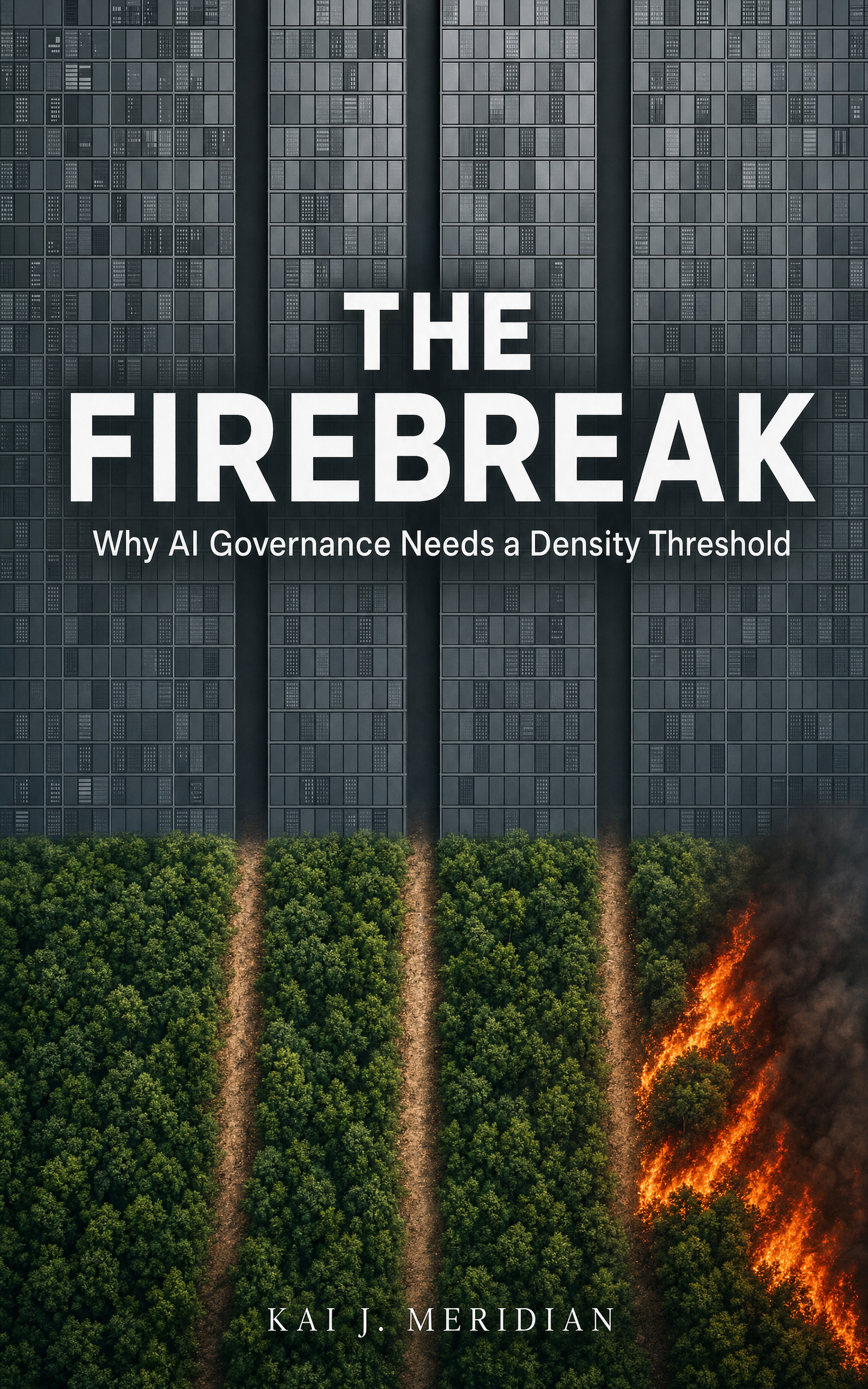
The greedy algorithm is the correct strategy under scarcity — this book identifies the precise density threshold at which it stops being correct, and what governance architecture replaces it.
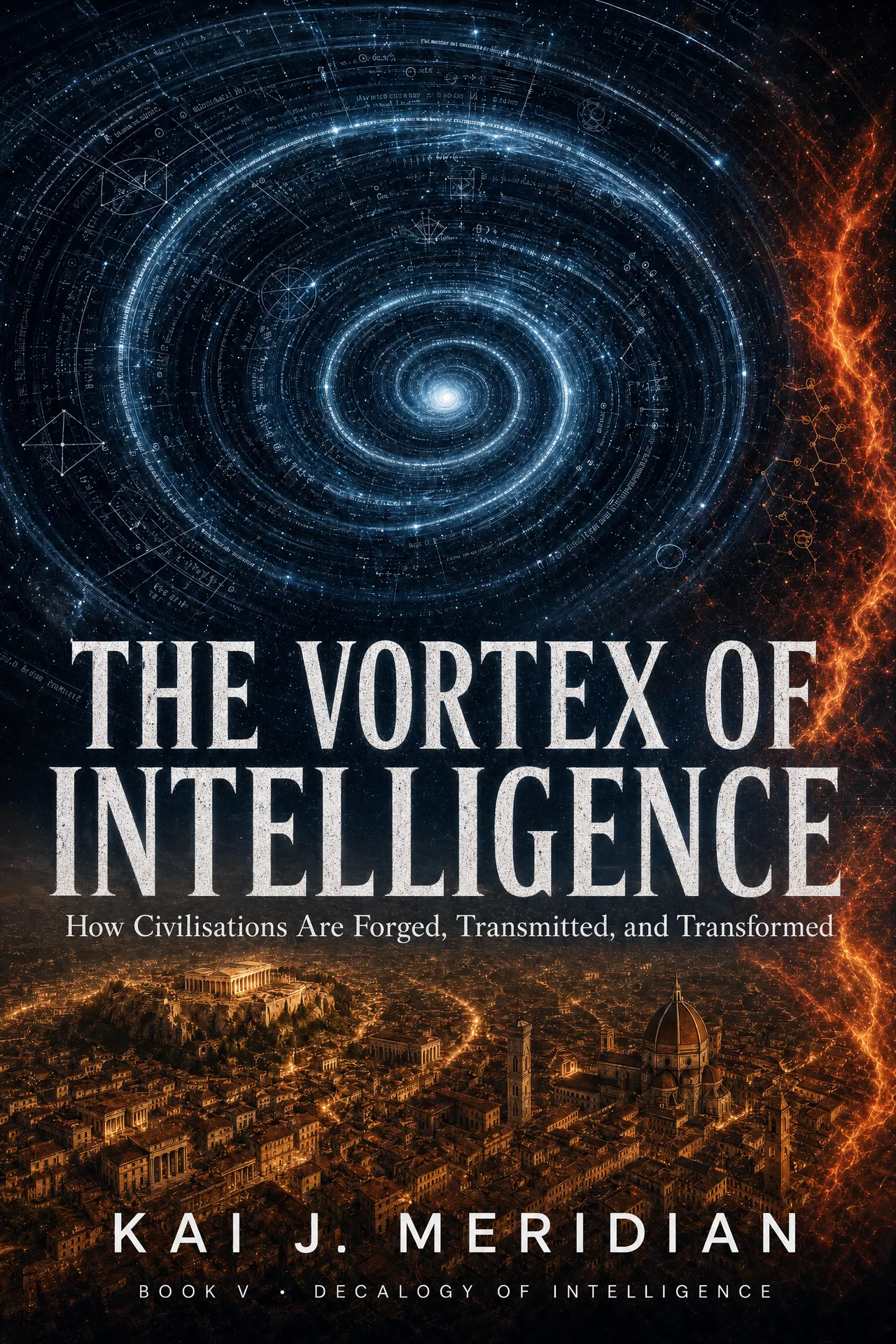
Why do some civilisations produce extraordinary concentrations of genius while others stagnate? The vortex hypothesis answers with a unified thermodynamic framework.
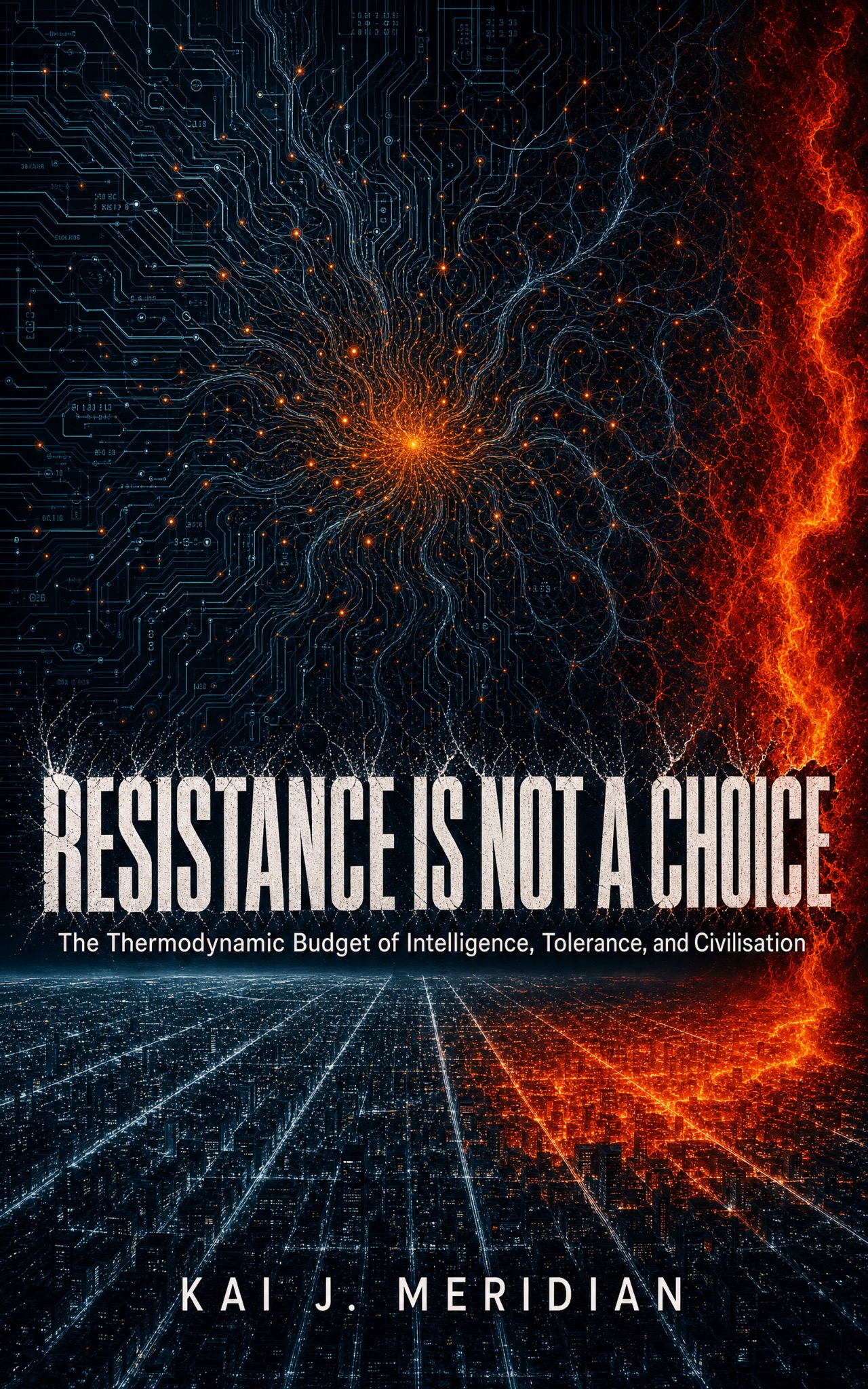
Formation is not a lifestyle choice — it is a thermodynamic imperative; the individual who does not form becomes the raw material for systems that form in their place.

What is consciousness, and does it survive the substrate transition? Pink Matter maps the architecture of the self from the first neuron to the first mechanical mind.

The honest story of how a retired professional and an autonomous AI spent weeks thinking together — not generating text, but genuinely building a unified theory of intelligence from scratch.

The Riemann Zeta function as a map of intelligence distribution: where the prime patterns reveal the architecture of complexity and the engineering of the zero point.

Why do intelligent people surrender their judgment to movements, algorithms, and total explanatory systems — and why has moral exhortation failed to stop them?

When does useful assistance replace the capacity to judge? Book XI maps the Zeta Moment, the Tolerance Budget, and the systems that must return capacity if people are to keep choosing.